
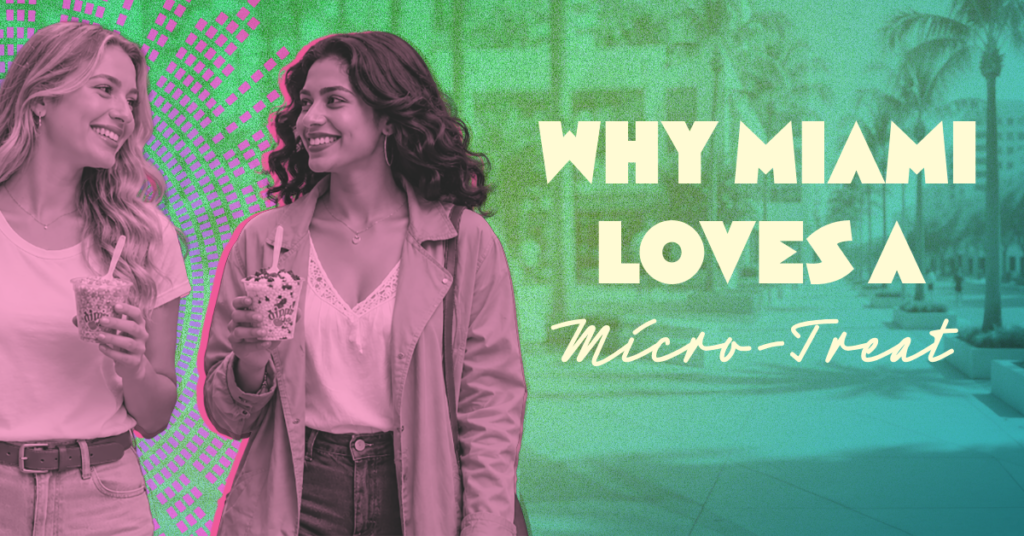
To walk through the corporate corridors of Brickell or the creative lanes of Wynwood at 3:00 PM is to witness a quiet, collective ritual: the Great Afternoon Migration. Workers step away from their keyboards not in search of a full meal, but for something altogether more precise. They are hunting for a “micro-treat”—a bag of perfectly spiced gourmet popcorn, a cup of flash-frozen beaded ice cream, or an artisanal tropical fruit infusion.
In the modern consumer lexicon, the old concept of the “impulse buy” has been largely retired. An impulse buy implies a moment of weakness—a cheap, sugary candy bar grabbed mindlessly because it was placed at eye level in a checkout queue. In contrast, today’s consumers are engaging in highly intentional, proactive self-gating. As Julia Peterson, a director of consumer marketing at youth culture agency Archrival, noted in an industry analysis on how young consumers utilize micro-luxuries to navigate daily stressors:
But what exactly turns a standard snack into a micro-treat, and why has it become the white-collar workforce’s preferred coping mechanism? Furthermore, why does this behavioral shift find its absolute capital in Miami?
A Brief History of the “Little Treat”
While buying a sweet snack to get through the day is a timeless human habit, its formalization into a distinct cultural and retail category is a relatively recent phenomenon.
The term “micro-treat” (and its sibling, the “little treat”) exploded into the cultural mainstream via social media around 2022, largely driven by younger consumers looking for small, manageable moments of control during a turbulent economic recovery. TikTok trends popularized the “little treat run” as a form of non-medicalized mental health maintenance.
However, the underlying mechanics are rooted in older corporate history:
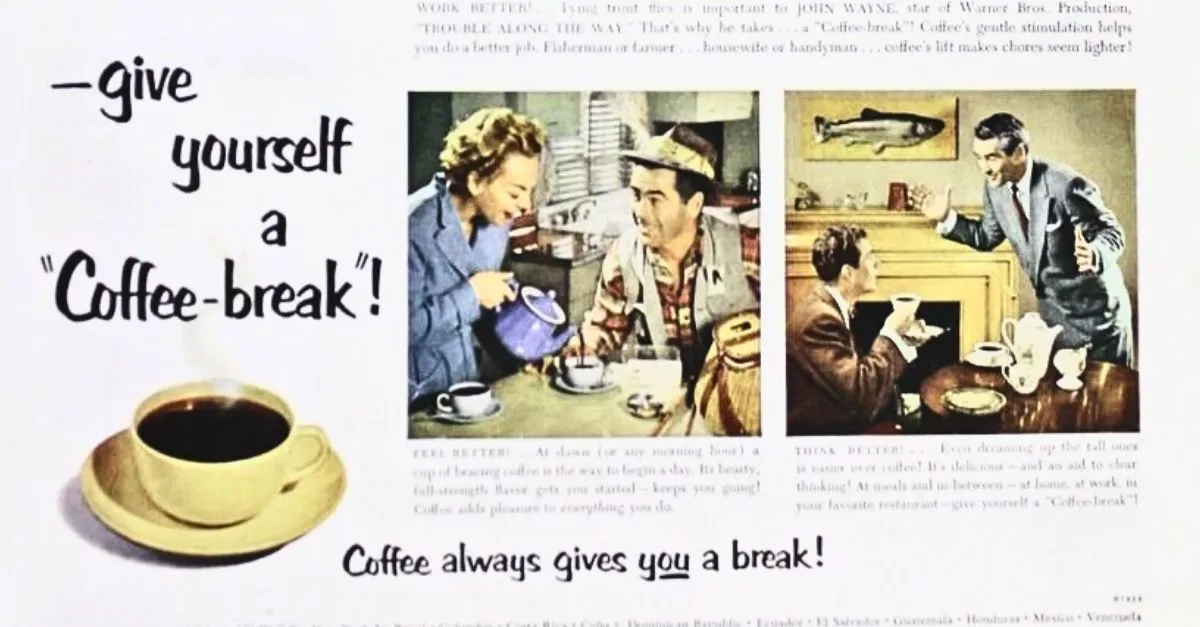
- The 1950s “Coffee Break”: In 1952, the Pan-American Coffee Bureau launched a massive $2 million marketing campaign introducing the phrase, “Give yourself a Coffee-Break—and get what coffee gives to you.” It effectively institutionalized the idea that workers are entitled to brief, paid intervals of small, liquid luxuries to sustain labor output.
- The Lipstick Effect (2001): Coined by Leonard Lauder, chairman of Estée Lauder, during the post-9/11 recession, this economic theory noted that sales of affordable luxuries (like lipstick) spiked even as major discretionary spending plummeted.
Today’s micro-treat economy is the modern evolution of these concepts. According to consumer data from Circana’s modern retail benchmarks, a staggering 62% of consumers characterize little treats as essential to their self-care routines.
Furthermore, data from SurveyMonkey’s Treatonomics Report shows that the financial boundaries of this behavior are incredibly strict: 52% of consumers specifically cap their treat spending at $25 or less per purchase, with food and beverage dominating 65% of all micro-treat transactions. It is a precise financial calculation: cheap enough to pass under the radar of personal budget anxiety, but premium enough to feel like a genuine indulgence.
The Endocrinology of the 3:00 PM Slump
While the purchase of a snack is an economic transaction, the driver behind it is purely biological. The human brain is an energy-intensive organ, consuming roughly 20% of the body’s metabolic energy. Under prolonged cognitive load, the brain’s fuel reserves deplete, triggering an uptick in stress hormones and a sharp decline in executive function.
- The Cortisol Countermeasure: Chronic stress keeps the body’s cortisol levels elevated, which impairs working memory and heightens anxiety. Behavioral studies show that stepping away from a workstation to engage in a highly tactile, pleasurable retail ritual acts as a biological circuit breaker, actively downregulating cortisol production.
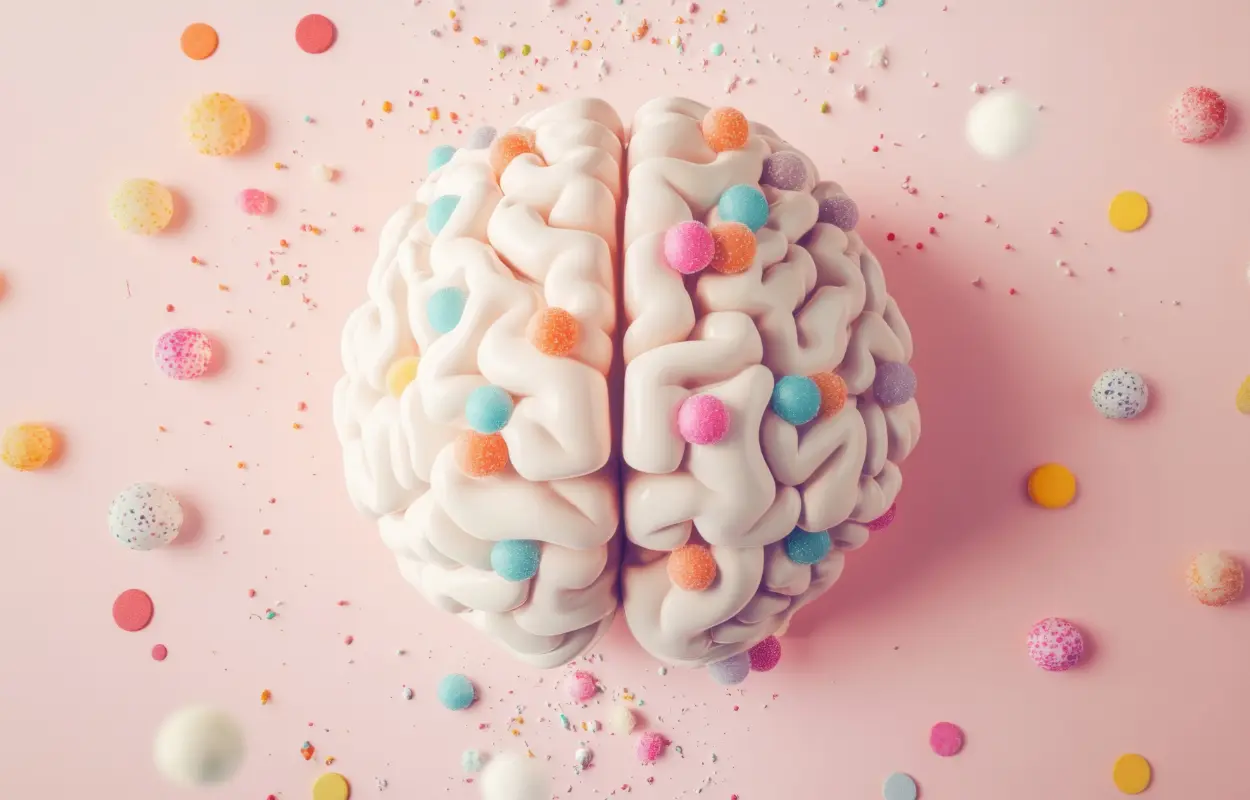
- The Dopamine Dividend: The anticipation and consumption of a premium sensory reward trigger a release of dopamine, the neurotransmitter responsible for motivation and focus. It is a physiological reset that transforms a sluggish brain from a state of depletion back to optimal operational capacity.
The Miami Exceptionalism
While the micro-treat is a global phenomenon, Miami serves as its ultimate economic incubator. The city possesses a specific convergence of climate, demographic layout, and labor economics that makes midday self-gating practically mandatory.
1. The Thermal Tax on Productivity
Miami’s climate acts as a literal metabolic tax. High heat and humidity force the human body to expend considerable energy simply maintaining core temperature regulation. When workers step outside into the sweltering South Florida afternoon, cognitive fatigue sets in twice as fast as it does in temperate climates. A refreshing, hyper-chilled micro-treat—like beaded ice cream—is not just an indulgence; it is a thermal countermeasure designed to rapidly lower body temperature and shock the nervous system back to attention.
2. Hustle Culture Meets Cost of Living
As Miami has transformed into a major financial and tech hub, it has imported a relentless, high-output work culture. Concurrently, the city has faced a steep rise in the cost of living. When macro-milestones like homeownership require immense capital preservation, the workforce adapts. Consumers maximize their immediate utility through small, premium, affordable luxuries instead. A high-quality afternoon snack becomes a highly accessible proxy for success.
3. The Street-Level Retail Fabric
Unlike sprawling, car-centric corporate parks, Miami’s key business districts (like Brickell, Downtown, and Coral Gables) are highly walkable, dense urban ecosystems. The physical layout of the city encourages street-level foot traffic and spontaneous interaction. This high-density pedestrian infrastructure lowers the friction of the midday break, making a quick walk to a snack kiosk the most natural social and physical outlet available during the workday.
The Modern Consumer’s Micro-Transaction
The data shows a widening gulf between the thoughtless impulse buys of yesteryear and the curated treats of today:
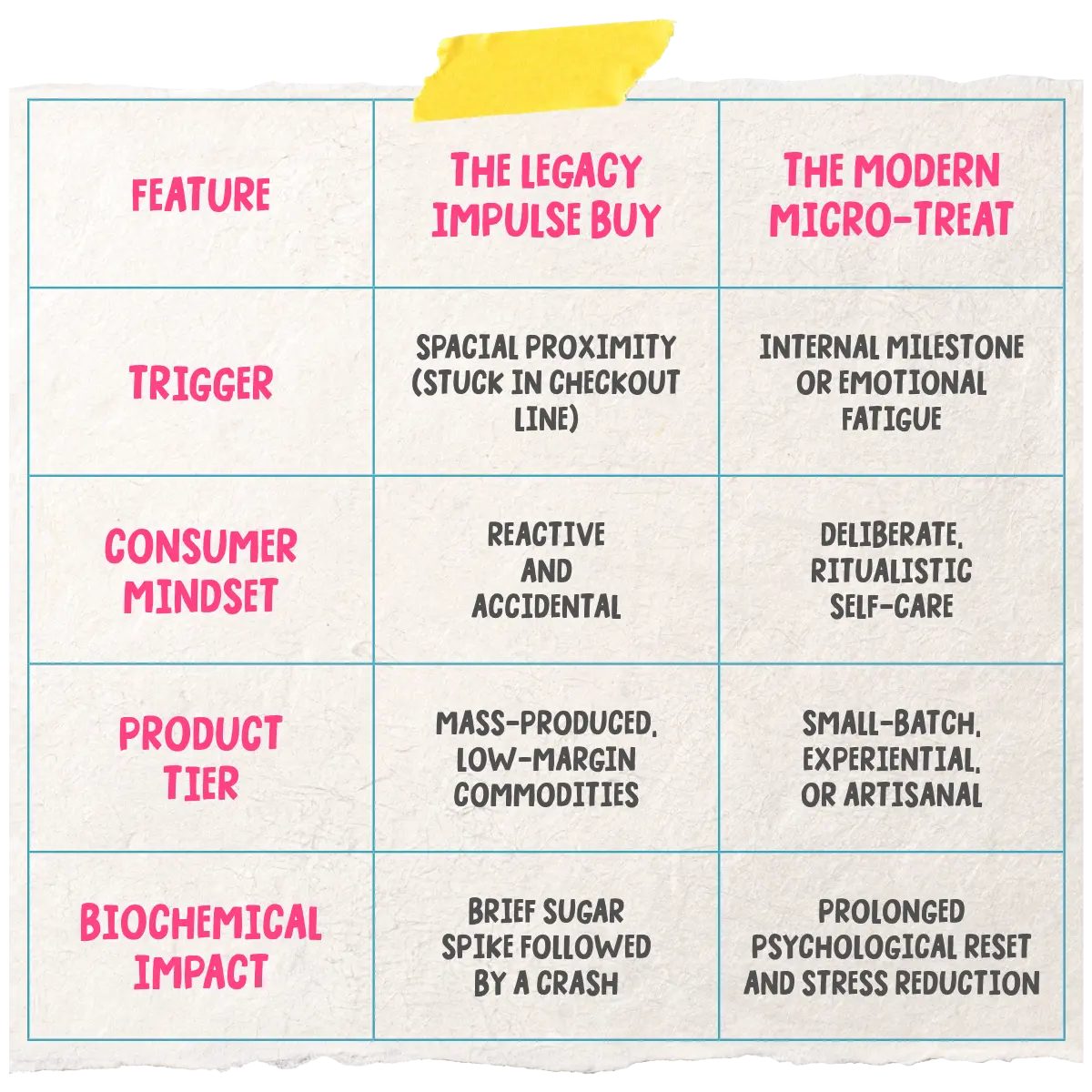
This structural shift perfectly explains why Miami’s unique snacking ecosystem is thriving. The city’s signature “Floribbean” culture—a landscape defined by the blending of tropical Latin, Caribbean, and classic American comfort profiles—is an ideal sandbox for the trend.
A standard, mass-produced chocolate bar no longer provides the necessary cognitive or biological jolt to wake up a tired mind. The modern treating ritual demands an experience. The sharp, unexpected crunch of premium seasoned popcorn or the refreshing, unique mouthfeel of flash-frozen beaded ice cream gives the consumer a premium sensory return on their time, lowering stress while offering a brief, vital moment of daily clarity.
Fuel Your Day the Miami Way
The next time you feel that afternoon slump hitting, don’t ignore it—embrace it. A well-timed snack break is one of the most effective strategies for maintaining your energy and focus throughout a busy Miami workday. By choosing a treat that offers a balance of quality and flavor, you aren’t just fueling your body; you’re reclaiming your afternoon.
We love being a part of those “reset” moments for our community. Whether you’re fueling up before an event or just need a little boost during your lunch hour, we’ve got your back. Check out our full menu of sweet and savory favorites to find the perfect micro-treat for your next break.
So, what’s your go-to “reset” snack when you’re out in the city? Do you gravitate toward the bold and savory, or are you a strictly sweet-tooth snacker? Let us know in the comments—we’re always experimenting with new ways to make your day just a little bit brighter.